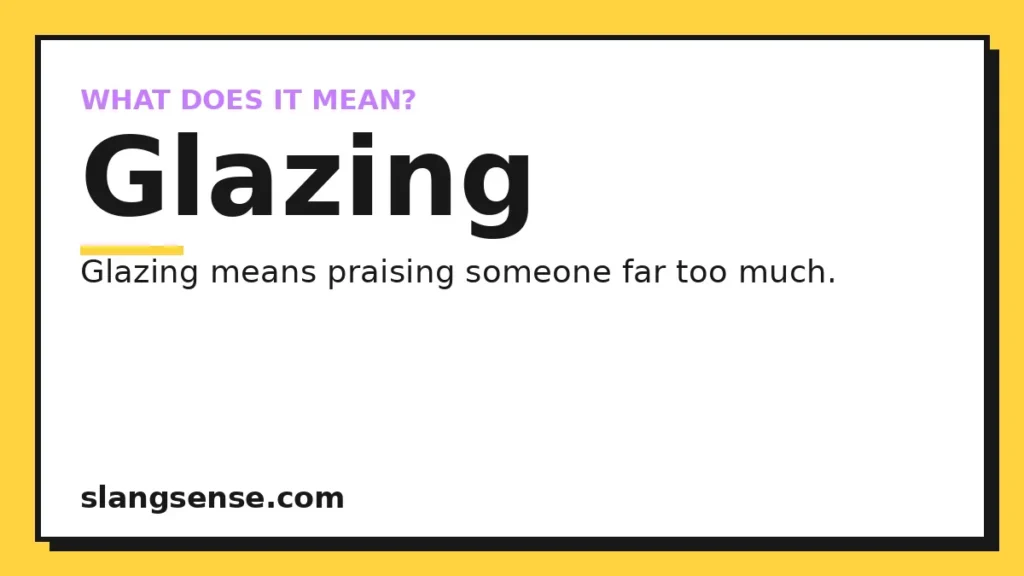
Glazing means praising someone or something far too much. If a friend says “stop glazing,” they think your compliments have gone over the top. The word is usually a light put-down, because it suggests the praise is bigger than the person or thing deserves. “Glaze” is the verb, and someone who does it a lot gets called a “glazer.”
What does glazing mean in a text?
Merriam-Webster’s slang entry describes glazing as showering someone or something with an excess of praise, and says the word tends to carry disapproval, as if the praise is not earned. It works as a verb (“he’s glazing her again”) and as a noun (“that review was pure glaze”). Most of the time it is aimed at a fan talking up a favorite player, singer, streamer or brand.
| How glazing is used | Example | What the sender means |
|---|---|---|
| Calling out a fan | “he’s glazing Messi again” | He praises Messi more than is reasonable |
| Teasing a friend | “ok stop glazing me lol” | Thanks, but that is a lot of compliments |
| A disclaimer | “not to glaze, but your cooking is elite” | I know this sounds over the top, but I mean it |
| Doubting praise | “the reviews are glazing this movie” | I think the movie is overrated |
| Asking for hype | “glaze me, I passed my test” | Hype me up, I earned it |
The last two rows surprise people. “Not to glaze” works like “no offense,” a little warning before a sincere compliment. Asking someone to glaze you is a joking way to fish for praise after good news.
Where does glazing come from?
The everyday word glaze means a shiny coating, like the sugar on a doughnut or the finish on a clay pot. Merriam-Webster says the slang seems to be a figurative stretch of that idea and that it started showing up on social media in the early 2020s. You coat someone in praise until they shine. That is why so many glazing memes use pictures of glazed doughnuts.
A TODAY explainer said the word grew more popular through viral TikTok videos in 2024 and 2025, and it became common in sports and streaming talk. TODAY also reported that streamer Kai Cenat told photographers to “glaze” him on the Grammys red carpet, turning the word into a playful request for attention.
Is glazing rude?
Mildly, most of the time. Telling someone they are glazing suggests their judgment is off because they like someone too much. Between friends it is teasing and nobody minds. In an argument it can be a way to brush off a view without answering it. “You’re just glazing” does not explain why the other person is wrong.
Being called a glazer is not a big insult, though. It sits closer to “fanboy” or “suck-up” than to anything cruel. For parents, glazing in a teen’s chat almost always means over-the-top praise, often about athletes, gamers or celebrities. If you are not sure how it was meant, the words around it usually make it clear.
How is glazing different from hyping, simping and stanning?
All of these are about liking someone a lot, but they do not carry the same judgment. The table shows what each word adds.
| Term | What it means | Tone |
|---|---|---|
| glazing | Praising someone more than they deserve | Teasing, a bit critical |
| hyping (someone up) | Building up a friend’s confidence | Positive and supportive |
| simping | Doing too much for someone you are attracted to | Mocking |
| stanning | Being a devoted fan | Positive or neutral |
| fanboying or fangirling | Getting very excited about something you love | Friendly, often said about yourself |
The difference with hyping is honesty. Hyping someone up is support before a big moment or after a win. Glazing is when the praise goes past what is true. Simping, which Merriam-Webster added to its dictionary in 2023, is about overdoing it for a person you have a crush on. Glazing can be about anyone or anything, from a quarterback to a phone.
How can you tell if someone is glazing?
Look at the size of the praise next to the size of the thing. A short “that was a great game” is just praise. A paragraph calling an average game “the greatest performance in history” is glazing. Repetition counts too. Someone who praises the same player in every message will soon get called a glazer, even if each compliment is fair.
Context matters as well. In a sports chat, glazing is a constant charge, because fans argue about players all day. In a family group chat it is rarer and usually a joke, as when a sibling says a parent is glazing the new baby. The more serious the topic, the more likely the word is meant to sting.
It also depends on who is listening. Fans of a rival team will call almost any praise glazing. So when someone says a review or a commentator is glazing, they may simply disagree. Treat it as an opinion about the praise, not proof that the praise is wrong.
How to reply to glazing
Keep it light. Nobody expects a serious defense. These replies fit the most common situations.
- Called out: “stop glazing” gets “ok fair, but he was really good”
- Praised by a friend: “you’re literally the smartest person I know” gets “stop glazing lol, but thank you”
- Asked to glaze: “glaze me, I got the job” gets “you earned it, so proud of you”
- You disagree: “the critics are glazing this movie” gets “maybe, I thought it was decent”
- You are not sure: “wait, is that a compliment or a roast?”
You can own it, too. Starting with “not to glaze, but” tells people you know the praise is big and you mean it anyway. For other slang in a message, paste it into our text slang translator and read it in plain English.
Last checked: October 30, 2026.