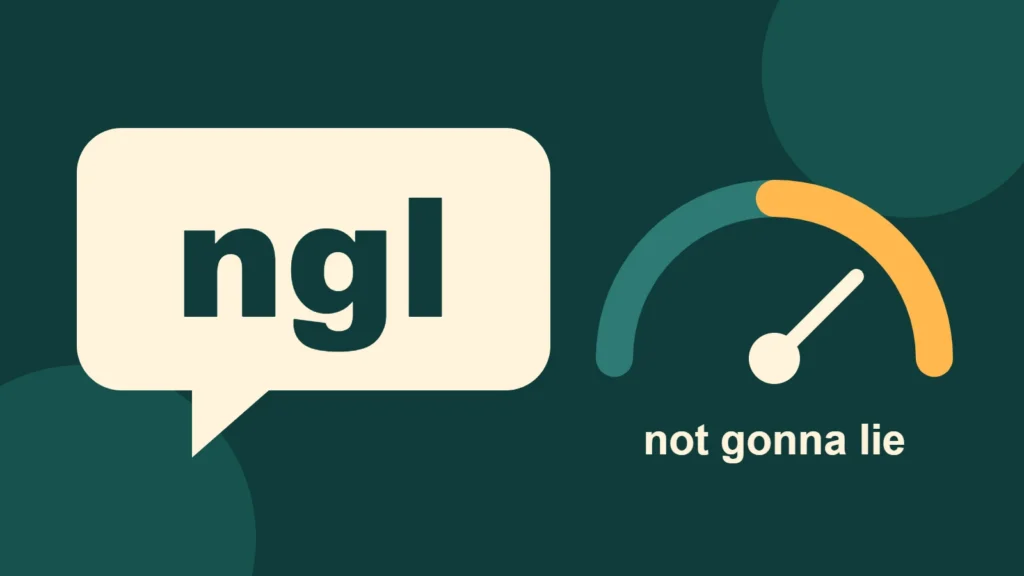
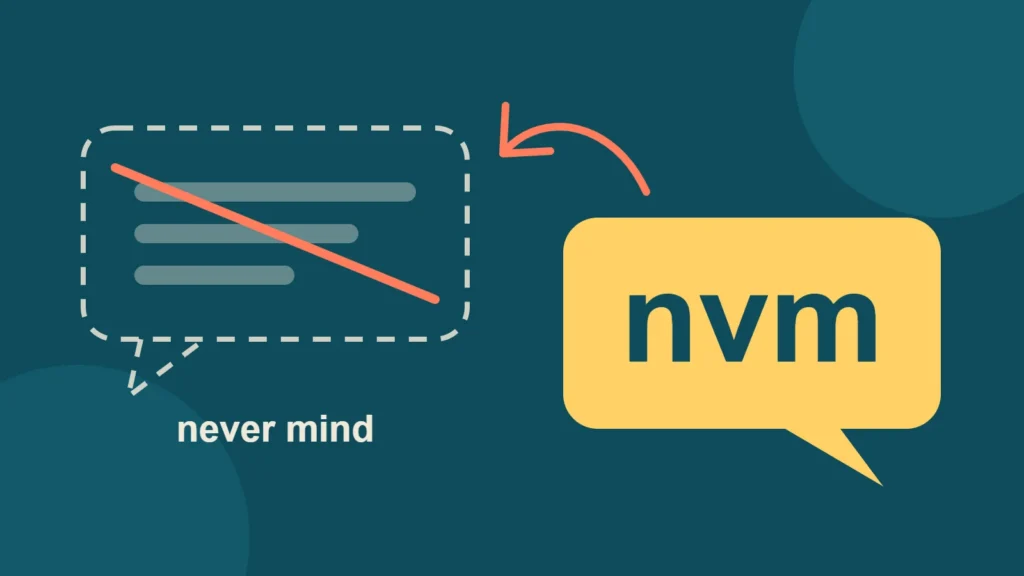
NVM means “never mind.” People type it in texts and chats to take back something they just said or asked. It tells the other person to skip it and move on. Most of the time it is harmless, but timing and punctuation can make it sound cold.
That short answer covers most messages. The harder part is working out which kind of nvm you just got, because the same three letters can mean “I found it” or “I give up.” This guide covers the meaning, the tone, the best replies and the other things NVM can stand for.
What does nvm stand for?
Nvm stands for “never mind,” with one letter taken from “never” and two from “mind.” Dictionary.com lists it as an informal abbreviation with exactly that meaning. You can write it as nvm or NVM, and How-To Geek notes that the lowercase form is much more common. It can be a whole message or the start of one, as in “nvm, found it.”
The phrase behind it is very old. Merriam-Webster dates “never mind” to 1677, in the sense of telling someone not to worry about something. The short form came much later, with chat rooms and texting, and it now sits beside hundreds of other shortcuts in our Gen Z slang list. So what is a sender really taking back when they type it?
What is nvm doing in a message?
In real chats, nvm does one of four jobs. Merriam-Webster describes the core use as a terse way of telling people to disregard your last comment. The table below shows how that plays out, from the friendly kind to the one that stings.
| What the sender means | Example message | How it sounds |
|---|---|---|
| I solved it myself | “Where’s the charger? nvm found it” | Friendly |
| I changed my mind | “Can you call me? Actually nvm” | Neutral |
| It is too long to explain | “So what happened was… nvm, tell you later” | Tired, not angry |
| I am hurt and pulling back | “I wanted to talk but nvm.” | Cold |
The first three are everyday housekeeping. The fourth is the one people worry about, and it is real. How-To Geek notes that nvm is sometimes used in a passive-aggressive or sarcastic way, for example to make someone feel guilty for not answering. That makes the next question the one most readers came for.
Is nvm rude?
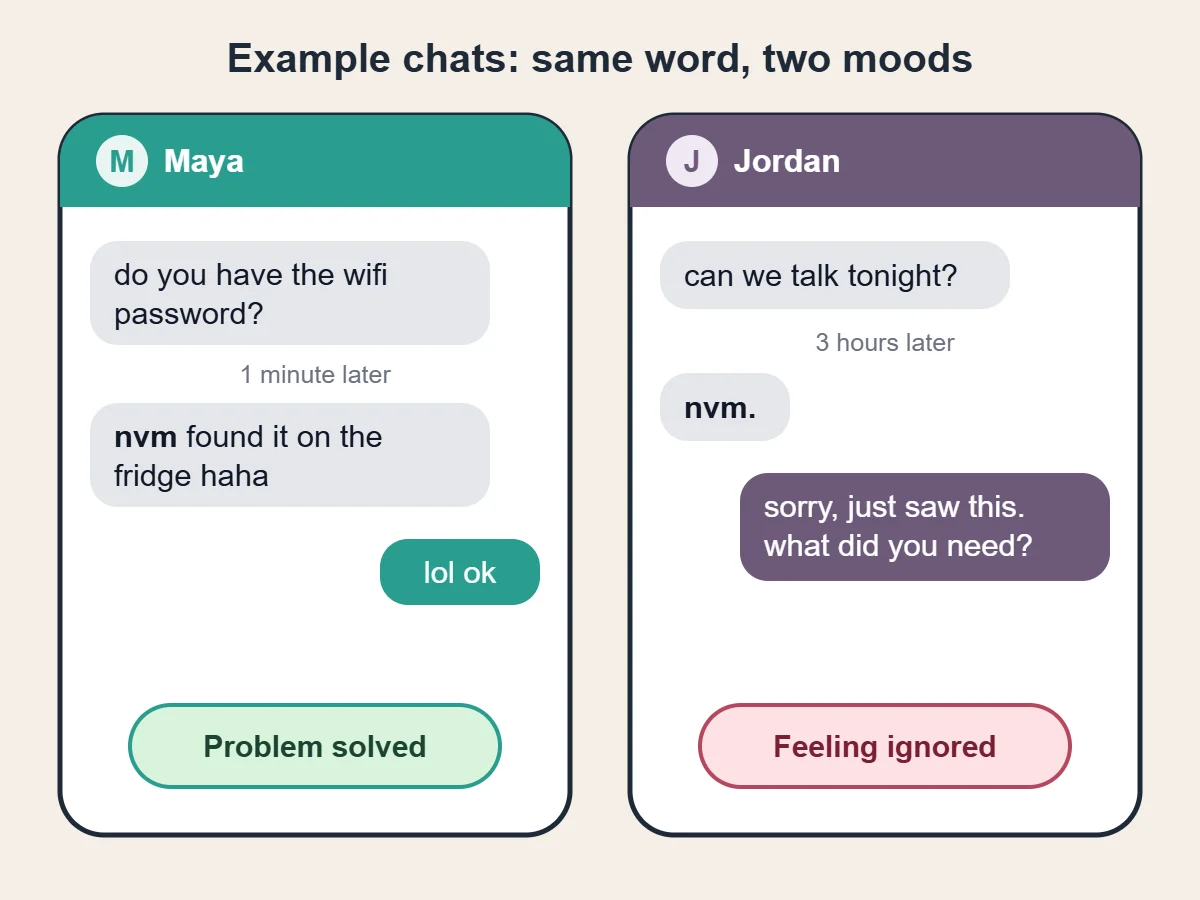
Nvm is not rude by itself. It turns sharp in three situations: after a long wait for your reply, in the middle of an argument, or when it arrives alone with a full stop. A reason attached to it nearly always softens it. Compare “nvm, got it” with a bare “nvm.” and you can feel the gap.
Short replies carry this risk in general, as our guide to what mk means in text shows. The clues below help you sort a harmless nvm from a hurt one. Look at what happened just before it, not only at the word.
- It comes with a reason, such as “nvm, found it.” The problem is solved and nobody is upset.
- It comes seconds after their own question. They answered it themselves.
- It comes hours after a message you never answered. They may feel ignored.
- It comes alone during a disagreement. They are upset and backing away from the talk.
The same reading applies whoever sends it. One Urban Dictionary entry from 2020 jokes that nvm is what a girlfriend texts when she is angry, much like “I’m fine.” That is one user’s joke and not a rule, so judge the moment and not the sender. Once you know which nvm you have, what should you send back?
How do you reply to nvm?
Match your reply to what happened just before the nvm. Tap the case below that fits your chat to see a reply that works. Every answer is short, because a long reply to nvm can feel like pressure.
They found the answer on their own
Send a thumbs up or “glad you found it.” Nothing more is needed. Asking “found what?” only drags the chat back to a closed question.
They changed their mind about a plan
Try “no worries, still up for it another time?” It accepts the nvm and leaves the door open. If they say no, let it go.
You took a long time to answer
Try “sorry, just saw this. What did you need?” It shows their question still matters to you. Do not explain the delay at length.
They sound upset, or stopped in the middle of something personal
Try “no pressure, but I’m here if you want to tell me.” Say it once and then give them room. Pushing a second time usually gets a second nvm.
Two replies tend to make things worse. A lone “?” can read as a demand, and a flat “ok” can read as if you never cared about the question. If the nvm came from someone close and it felt cold, a quick call often clears it up faster than more typing. That covers getting an nvm, so when is it a bad idea to send one?
When should you not send nvm?
Skip nvm at work and with people who do not know you well. Dictionary.com labels it informal, and a bare nvm to a manager or a client can look careless. It can also leave the other person unsure whether they still need to act. A full sentence takes two more seconds and removes the doubt.
- To a teammate, write “No need, I found the file.”
- To a client, write “Please ignore my last message.”
- To a friend you kept waiting, write “All sorted now, thanks anyway.”
Parents and teachers do not need to worry about the word itself. Nvm is plain shorthand, not a code with a hidden meaning. If a child sends it again and again after messages nobody answered, it may be worth asking how that chat is going. There is one more mix-up to clear away, and it is only two letters long.
Is nm the same as nvm?
Not always. Merriam-Webster treats NM as a second short form of never mind. On Urban Dictionary, though, most entries on the first page for nm define it as “not much” or “nothing much.” That makes it the stock answer to “what’s up” or to wyd.
| Form | What it stands for | Where you see it |
|---|---|---|
| nvm | never mind | After the sender’s own question or comment |
| nm | not much, or sometimes never mind | As a reply to “what’s up,” or used like nvm |
| nvmd | never mind | A rarer spelling that How-To Geek also lists |
| never mind | the full phrase | The usual spelling, as two words |
| nevermind | the same phrase as one word | Seen more and more, says Merriam-Webster |
A simple test splits the two meanings of nm. After a greeting it means not much, and after the sender’s own question it means never mind. Merriam-Webster adds that the one-word noun “nevermind” is dialect, as in “pay him no nevermind.” Spelling is not the only thing people ask about, though.
Does nvm mean something else on Snapchat, Instagram or TikTok?
No, nvm means never mind on every app, and only the look changes, such as a hashtag on a public post. At least one tech site says that on Snapchat it is sometimes read as “not very much.” The only other support found for that reading is a single Urban Dictionary entry from 2005, so treat it as rare. The letters do change meaning, however, once you leave chat apps behind.
What else does NVM stand for?
Outside texting, NVM is a common name in computing. On Bing on October 11, 2026, the top three results for “nvm” alone were pages about a coding tool. The setting tells you which meaning you are looking at.
| Setting | NVM means | Clue |
|---|---|---|
| Texts, chat and social media | never mind | Lowercase, right after a question |
| Coding | Node Version Manager, a tool for switching between versions of Node.js | Words like install, node or terminal nearby |
| Computer hardware | non-volatile memory, which keeps its data with the power off | Words like chip, flash or storage nearby |
| Merriam-Webster’s dictionary entry | “Nativity of the Virgin Mary” and “nonvolatile matter” | Formal writing, and rare |
That last row holds a surprise. Merriam-Webster’s own dictionary entry for NVM does not list “never mind,” although its usage article explains that sense. The texting meaning is everywhere, yet it is still too informal for the main entry. That leads to the last question, which is how long people have been typing it.
How old is nvm?
Nobody has a first use on record, so the true origin is unclear. How-To Geek says nvm has been used since the earliest online chat rooms, but it gives no example. The earliest dated entry among the 30 checked on Urban Dictionary was posted on January 6, 2003, and it simply points to “nevermind.” Dictionary.com wrote in 2018 that NVM is often used as a hashtag.
So the phrase is centuries old, the short form is at least two decades old, and the meaning has not moved. What changes from message to message is the mood behind it. If a text is full of short forms you cannot place, paste it into our text slang translator for a plain-English version.
Last checked: October 11, 2026.